


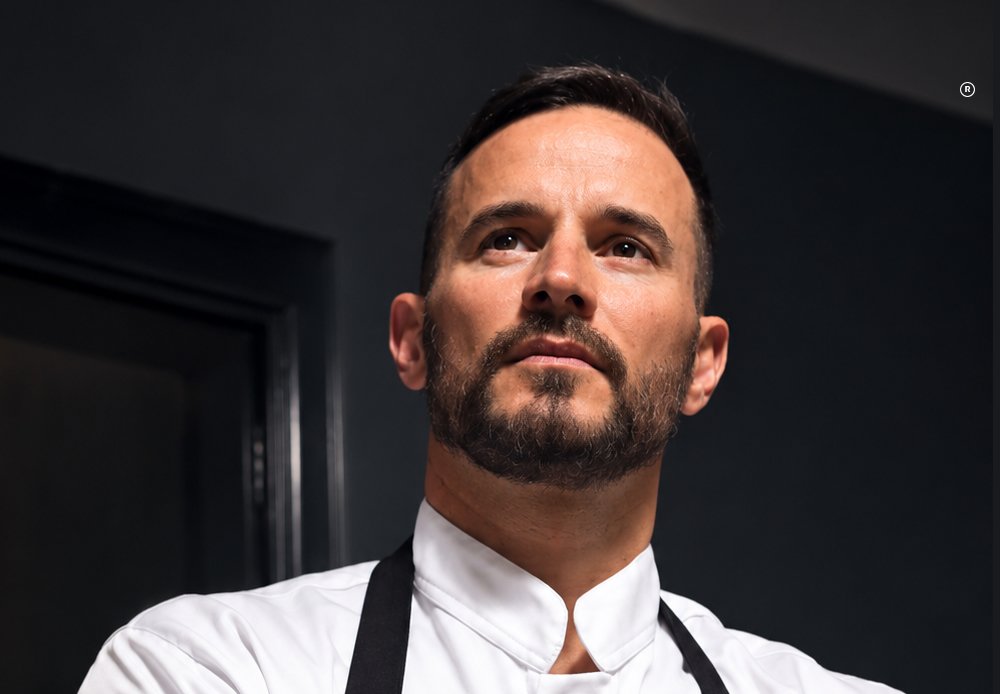
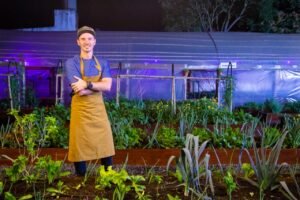
For chef Gunther Moros, cooking is more than a profession—it is a way to preserve the cultural identity of Misiones, celebrate its ancestral knowledge, and protect the biodiversity of the rainforest. Through a culinary philosophy rooted in local ingredients, regenerative practices, and close relationships with regional producers, Moros is helping bring the flavors of Argentina’s northeastern province to a wider audience.
Born and raised in Misiones, Moros has more than 25 years of experience in gastronomy, including an extensive journey through international kitchens in countries such as Chile, Norway, and Italy. Those experiences strengthened his determination to return to his roots and explore the richness of his own culinary heritage. Rather than reproducing international trends, he has dedicated himself to reinterpreting traditional recipes, recovering ancestral techniques, and showcasing ingredients that reflect the unique identity of the region.
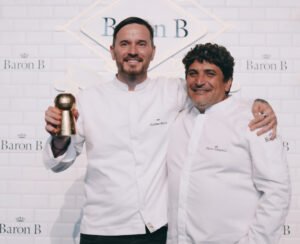
His work gained national recognition in 2024 when he won the prestigious Prix Baron B – Édition Cuisine for Experiencia Cocina Regenerativa – Margay Reserva Natural & Lodge. Located in the heart of the Misiones rainforest, the project brings together gastronomy, environmental conservation, and regenerative practices, demonstrating how cuisine can become a powerful tool for protecting local ecosystems. The award also gave Moros the opportunity to undertake a professional internship at Mirazur, the celebrated restaurant led by Argentine chef Mauro Colagreco on the French Riviera.
For Moros, however, the essence of his cooking remains firmly connected to the land. Cassava, yerba mate, river fish, native mushrooms, wild herbs, and traditional corn varieties are not simply ingredients; they represent generations of knowledge and the cultural diversity that defines Misiones, shaped by Guaraní heritage, neighboring Paraguay and Brazil, and European immigrant communities.
His approach also places local producers and Indigenous communities at the center of the gastronomic experience, emphasizing fair partnerships, responsible sourcing, and a deeper understanding of the relationship between food and nature.
In this exclusive interview with Misionestimes.com, Gunther Moros reflects on his culinary journey, the flavors that best represent Misiones, the importance of preserving ancestral knowledge, and the opportunities to position the province as a distinctive gastronomic destination in Argentina and beyond. He also shares his vision for a future in which cooking not only celebrates local identity but helps ensure that the rainforest and its communities continue to thrive.
Gunther Moros: A Chef Defending the Identity of Misiones and Its Rainforest
I am a chef from Misiones. I didn’t train to leave; I trained to return and understand where I stand.
How did your journey in gastronomy begin? What experiences, people, or moments sparked your passion for cooking and led you to develop your own identity as a chef?
My journey didn’t begin in a culinary school. It began on the family farm and at the kitchen sink.
I’m from here, from Misiones. My first kitchen was my family’s, filled with the smell of freshly baked chipa, cassava stew, and my grandmother’s reviro. Later, it was the farms of local producers who opened their gates to me without asking any questions.
I left to study, worked abroad, and spent time in major kitchens, surrounded by big egos and intense heat. At some point, I realized I was cooking with ingredients I didn’t know, products that arrived in boxes, and I didn’t even know the names of the people who had harvested them. That was my turning point.
I returned to Misiones and understood that my identity wasn’t about copying what was being done elsewhere. My identity was the rainforest itself. It was one person, Don Ramón, a producer from Andresito, who showed me how to harvest yerba mate beneath the forest canopy, without pesticides, in the shade. He told me: “Gurí, you don’t control the rainforest; you listen to it.” That changed everything for me.
From that moment on, my cooking became regenerative, ancestral, and rooted in Misiones. I don’t invent dishes; I recover memories.
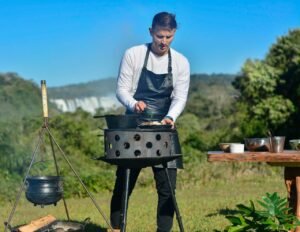
Misiones has a distinctive gastronomic identity shaped by Guaraní culture, the influence of Paraguay and Brazil, and the traditions of its diverse immigrant communities. What makes the cuisine of Misiones unique, and which flavors or dishes do you consider essential for first-time visitors to the province?
Misiones is a province you cannot truly understand until you taste it.
What makes our cuisine unique is the coexistence of three worlds that don’t compete with one another but embrace each other: Guaraní culture, which is our foundation; the Paraguayan-Brazilian influence, reflected in the everyday exchange across our borders; and the traditions of immigrant communities—Ukrainian, German, Polish, and Swiss—that brought techniques for preserving food, fermentation, and baking.
We are forest and river. We are not the Pampas. Here, grilled beef isn’t the centerpiece; cassava is.
If you’re visiting for the first time, there are five flavors you simply cannot leave without trying:
- Real cassava: Not the packaged kind. Freshly harvested, fried in fat, or prepared as chipa so’o. It is our bread.
- River fish: Surubí, pacú, or dorado cooked over embers, with crispy skin. Don’t smother it in sauce.
- Kivevé and humita: Guaraní corn traditions. Sweet, creamy, and prepared slowly, with care.
- Wild forest mushrooms and herbs: Pine mushrooms, yacaratiá, cocú, and Misiones-grown ginger. They capture the fragrance of the rainforest.
- Yerba mate beyond the traditional infusion: Used as salt, as ash, or for smoking ingredients. That is my obsession.
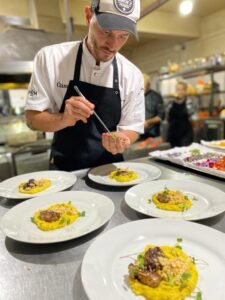
The province offers a remarkable diversity of regional ingredients, from cassava and wild mushrooms to herbs and river fish. How do you incorporate these ingredients into your creations, and what role do local producers play in your culinary philosophy?
I don’t buy ingredients; I build relationships.
Ninety percent of what enters my kitchen has a name and a surname. I work with women producers in Andresito, with Mbya communities who bring me mushrooms and herbs that you won’t find in any book, with farmers raising pacú in natural ponds, and with the woman in Oberá who makes the finest toasted cassava flour.
How do I incorporate these ingredients? By not covering them up. The rainforest is already perfect.
Let me give you an example: cassava. I use it in five different ways: in a kesú cheese croquette served with smoked bell pepper romesco; fermented as the base for a sourdough starter; as starch for a mbejú topped with pork shoulder braised for eight hours; as a leaf for wrapping a tamale; and as ash for curing fish. One ingredient, five techniques.
Local producers are not merely important; they are the entire proposition. Without them, I am just a chef with ideas. With them, I become a translator of the land.
If you don’t look after the people who produce your food, no concept of sustainable gastronomy is worth anything. That is why I pay fair prices, buy the entire harvest, and cook with what is available rather than what I happen to want.
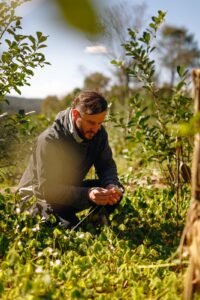
Cuisine can be a gateway to discovering the biodiversity and culture of Misiones. How can gastronomy help visitors connect with the rainforest, local traditions, and communities while promoting more sustainable tourism?
Food is the fastest way to fall in love with a place. Nobody falls in love with a speech; everyone falls in love with a flavor.
I tell visitors: don’t come here just to see Iguazú Falls and eat a milanesa. Come to taste the rainforest.
When you try yerba mate and tacuarembó ice cream, when you taste a lemon ant from the Guaraní community, or when you understand that the pacú on your plate helped clean the water in a local farm pond, you begin to understand biodiversity without anyone having to explain it to you.
My approach to sustainable tourism is very simple:
- Shorten the distances: If a product travels 10 kilometers instead of 1,000, you reduce pollution and keep the money here in the local economy.
- Tell the story: My menu doesn’t simply say “fish of the day.” It says, “Pacú from Beto’s farm in Candelaria, raised without antibiotics.” People take care of what they know.
- Give back to the community: Part of what we do goes back into the community through workshops in Indigenous villages and direct purchasing. It isn’t charity; it is reciprocity. It is what the Guaraní call jopói—open hands, the spirit of giving and sharing.
Cooking can transform a tourist from a visitor into a guardian of the land, even if only for a little while.
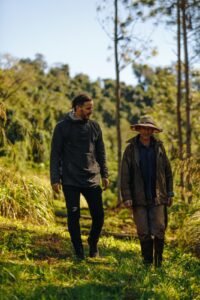
What potential do you see for Misiones to establish itself as a gastronomic destination recognized nationally and internationally? What culinary experiences or flavors would you recommend to those who wish to discover the province through its cuisine?
Misiones has everything it needs to become Argentina’s next great gastronomic destination—and a destination for the world. Everything. But that won’t happen if we try to become Lima or Buenos Aires. It will happen if we dare to be unapologetically Misiones.
We have the Paraná rainforest, one of the planet’s richest areas of biodiversity. We have 15 living Guaraní communities with 500 years of accumulated knowledge. We have freshwater, yerba mate, tea, cassava, and ancestral varieties of corn. Nobody else has this exact combination.
What are we missing?
We need to believe in ourselves. Stop asking for permission. Stop assuming that what comes from elsewhere is better.
Our potential is enormous if we work across three key areas: identity (not copying others), producers (helping them formalize their businesses and protecting their livelihoods), and regenerative cooking (producing food without destroying the forest).
My recommendation for anyone who wants to discover Misiones through its cuisine?
Don’t look for the trendiest restaurant. Look for:
- A farm breakfast with hot chipa and cocido quemado, a traditional roasted yerba mate drink.
- A grilled river-fish lunch at a fishermen’s eatery along the Paraná River.
- An afternoon snack of reviro and mate in an Mbya village, taking the time to listen.
- A dinner where the chef tells you where every ingredient comes from.
If you experience these things, you will never forget Misiones. Because Misiones isn’t just a place you visit; it is a place you taste. And when you truly taste it, it stays with you.
Gunther Moros: Chef from Misiones — Local, Ancestral, and Regenerative Cuisine
(C) MISIONESTIMES.COM 2026